
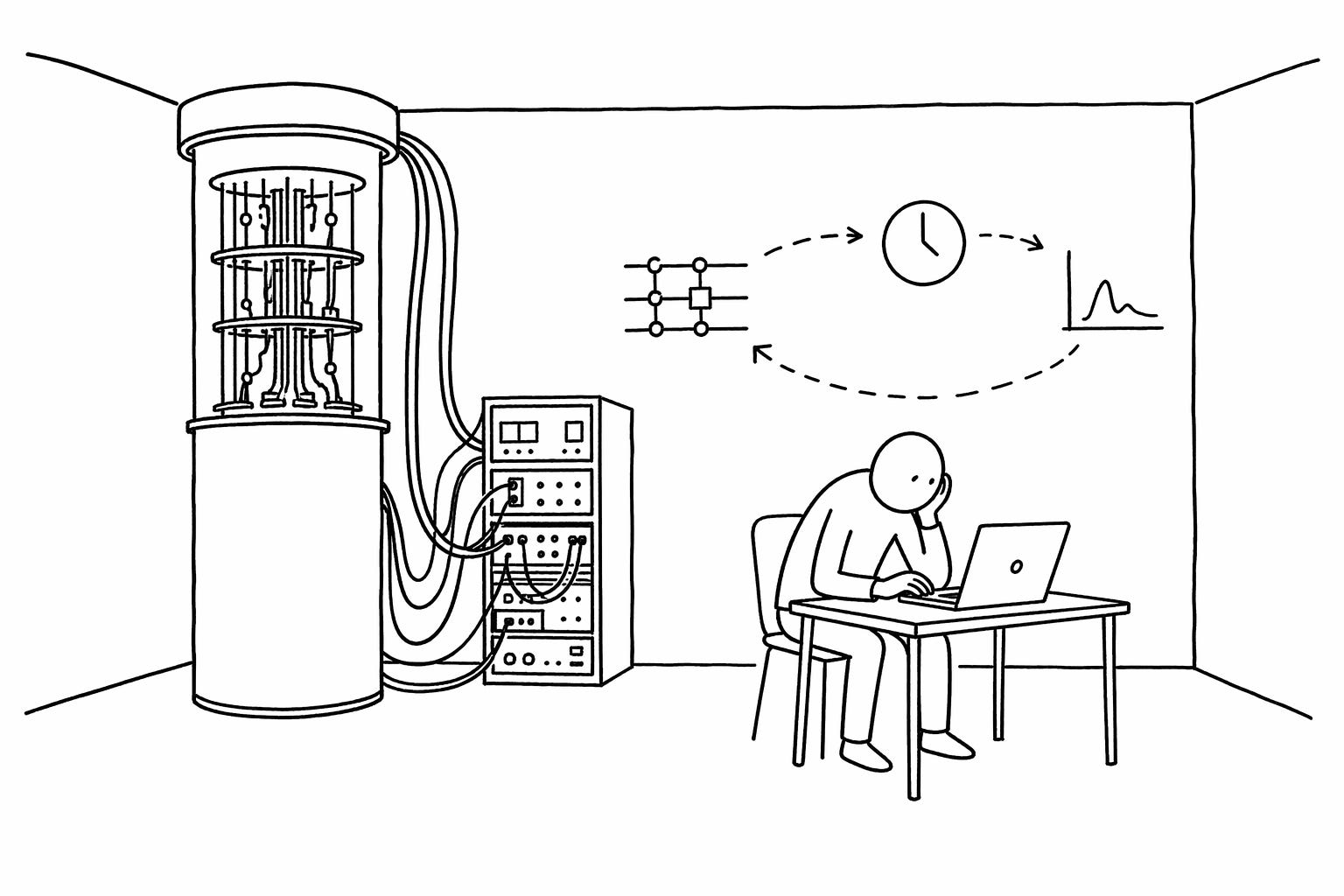
Most quantum computers sit in basements and labs, connected to stacks of control electronics. A researcher prepares a circuit, submits a job, inspects the result, and tries again. Every step in that loop is manual.
That is the wrong abstraction. At Conductor Quantum, we build AI systems to close that loop without human input. Before a quantum circuit reaches hardware, it has to be constructed, validated, adapted to device constraints, and optimized. Until now, that process required cycles of debugging, waiting, and reworking. We have automated it.
This post introduces Coda and Coda Node: what they are, how they work together, and why they matter for labs running their own quantum hardware.
Why Coda?
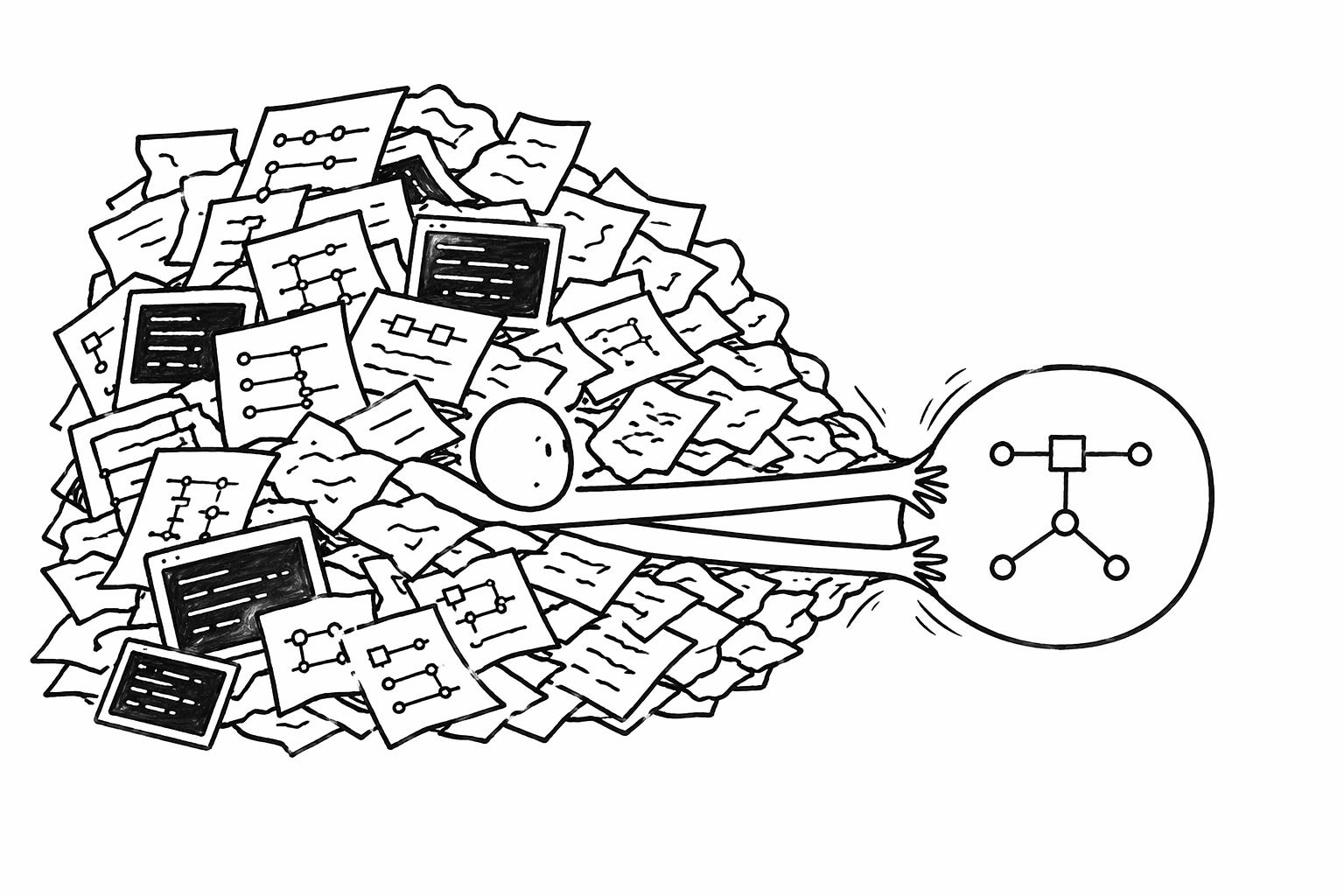
Coda helps quantum algorithm researchers iterate in minutes instead of days by turning complex quantum development workflows into a single natural-language prompt.
It is a quantum-native AI agent that builds, validates, and prepares quantum algorithms to run on real hardware. Instead of forcing researchers to manually bridge the gap between AI-generated circuits and quantum machines, Coda puts the AI and the quantum computer in the same development loop.
Today, a quantum algorithm researcher’s average day is spent debugging code, waiting on results, inspecting outputs, adjusting parameters, and running code again. The thinking part, the part that requires years of expertise to even formulate, gets squeezed into the gaps.
Consider a typical task: building a 20-qubit Variational Quantum Eigensolver, or VQE, circuit to model a molecule, then evaluating it across many parameter settings inside a classical optimization loop to map the energy landscape. This process is essential for identifying ground states, but coordinating it manually is slow and complex.
With Coda, that workflow becomes a single prompt. Coda builds the circuit, validates it, compiles it, and delivers it ready to run.
The result is not just speed. Researchers can test ideas that would not have survived the overhead of manual implementation. The bottleneck shifts from tooling back to thinking, where it belongs.
Why Coda Node?
The next question is: run on what hardware?
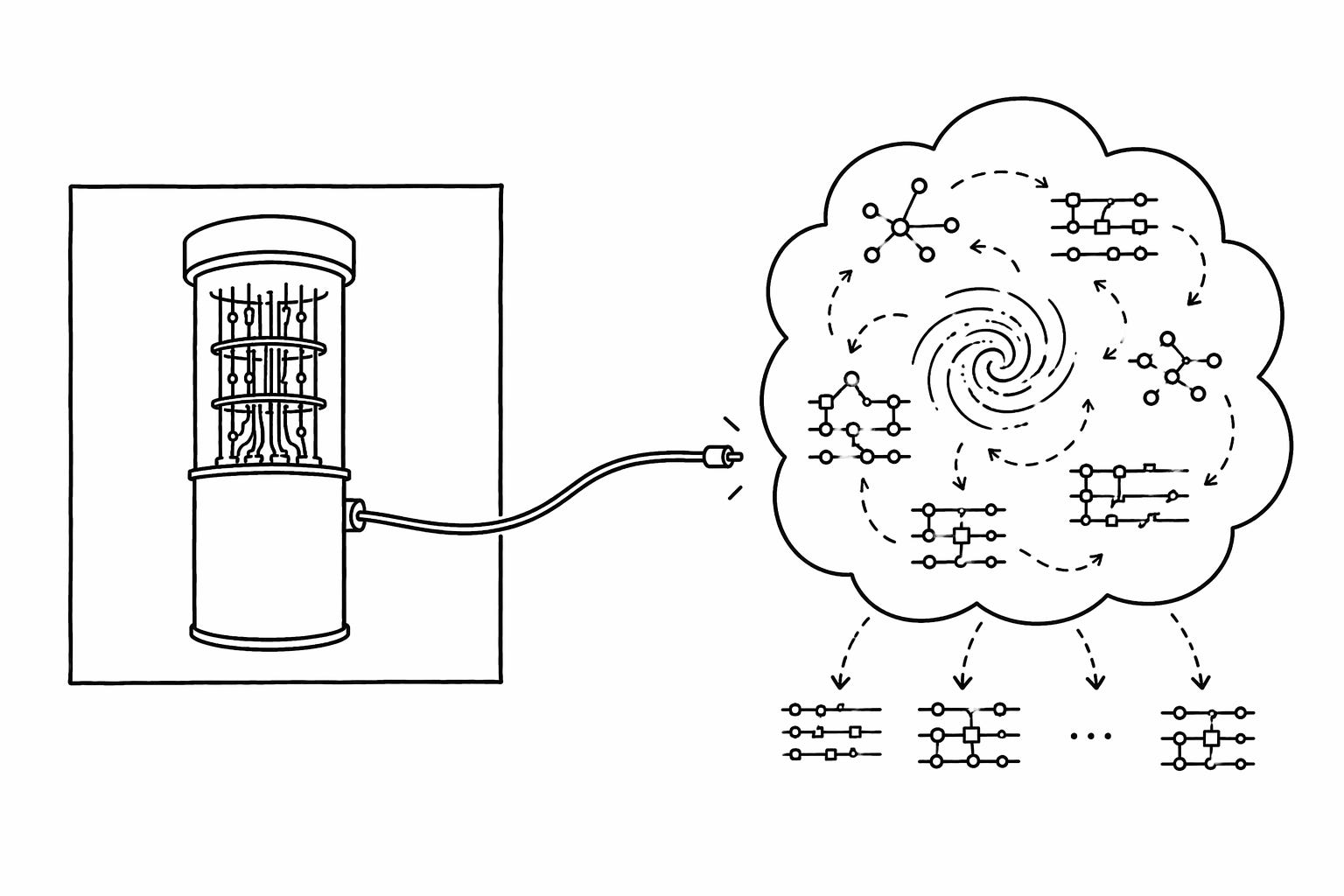
Coda Node lets researchers bring their own quantum processing unit (QPU) into Coda’s workflow.
It is an open-source runtime that runs alongside a QPU and connects it to Coda. Once connected, Coda can send jobs to that machine, track its state, and receive signed results back from the lab.
This matters because many researchers operate QPUs inside their own institutions. These are real machines, under local control. Without a runtime at the hardware boundary, the intelligent workflow stops there. The researcher goes back to submitting jobs, watching queues, and moving results by hand.
Coda Node handles the machinery behind that connection: provisioning, secure VPN connectivity, job consumption, and signed result delivery. The goal is simple. If you have a QPU, you should be able to make it part of an intelligent workflow.
How does it work?
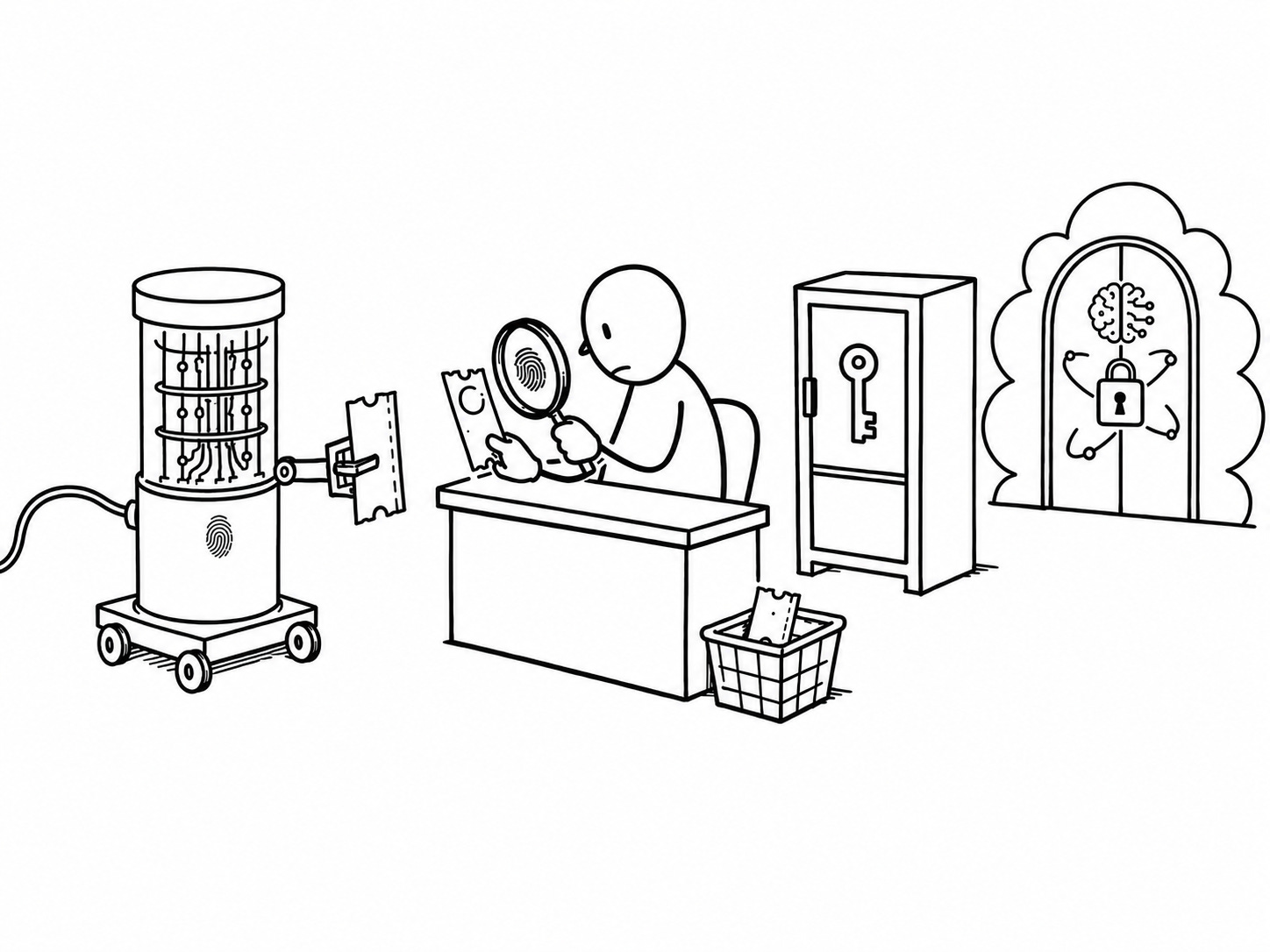
A researcher generates a token for their QPU. Think of it as a claim ticket, not a key. It lets the QPU ask Coda for access, but it does not contain access itself. When the token is created, there is no private key, no VPN certificate, and no reusable machine credential.
Sensitive material appears only when the QPU connects. The QPU presents the token and a machine fingerprint, a stable label for that host. Coda checks that the token exists, has not expired, and has not been used. It then issues a cryptographic identity to the QPU.
That identity has two parts: a private key kept by the QPU and a public key kept by Coda. The private key lets the QPU sign future messages. The public key lets Coda verify those messages. This is what a credential means here: proof a machine can present without sharing its secret.
After enrollment, the QPU stops sending the token. It signs short-lived messages with its private key. Coda checks those signatures before it accepts heartbeats, job results, or reconnect requests. In VPN mode, Coda also creates a tunnel credential for that host.
If anything goes wrong mid-handshake, Coda unwinds what it created before returning an error. No half-issued keys. No certificates in an unintended state. No token consumed after a failed setup.
Coda does not guess what configurations a QPU should have. The operator has to declare that up front: connection mode, private tunnel, and network scope. If those answers are missing, Coda stops instead of filling them in.
That sounds strict, but it is the safer choice. Many security problems start with software trying to be convenient. It opens a wider door than intended, creates access before it is needed, or treats a blank setting like permission. Coda takes the opposite path. If access was not declared, access does not exist.
Our vision for Coda Node
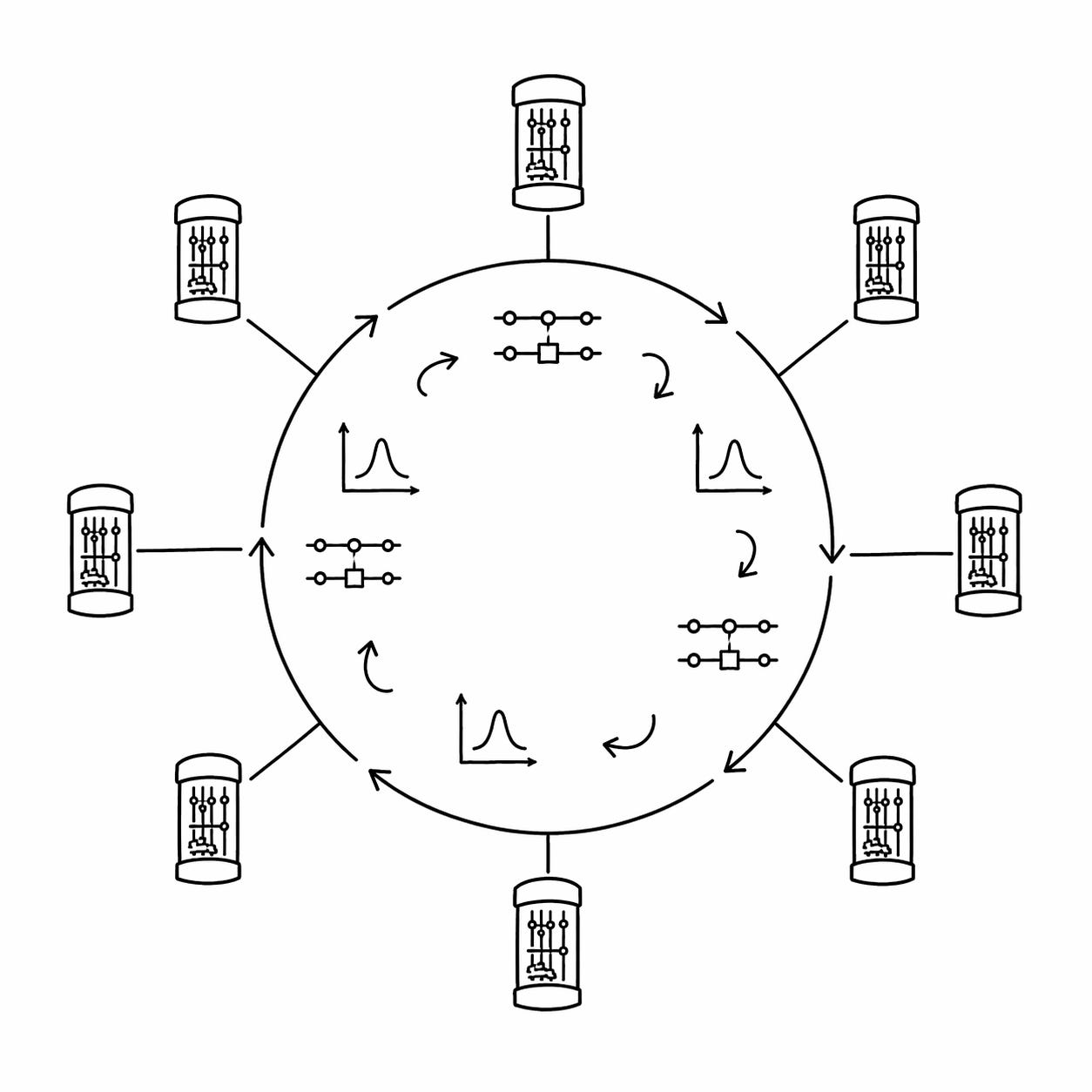
Once connected, a QPU is no longer an isolated machine. It is part of a rich ecosystem of intelligent quantum hardware that is continually running experiments, learning from the results, and iterating endlessly. That is the loop that good research requires, and it runs without a human turning the crank at every step.
The number of QPUs in research labs around the world is growing. Any researcher with a self-hosted QPU can now make their hardware an active participant in that loop. Smarter experiments, faster iteration, less time lost to tooling.
That quantum computer in your basement deserves better. Start with Coda and our Coda-node documentation.
Link to Coda.
Link to the Github Coda-node repo.
Link to our documentation.
Conductor Quantum is building quantum superintelligence. We are an American company headquartered in San Francisco, California. We are assembling a team of hardcore engineers whose sole focus is to develop quantum superintelligence. If you would like to solve one of the hardest technological challenges of our time, this is your chance. Join us.